
Which Adhesive Should You Use for Polystyrene and Skirting Boards?
Choose adhesive for polystyrene and skirting boards according to the material’s weight and the surface. Lightweight, delicate polystyrene needs a solvent-free acrylic adhesive that will not dissolve it. Skirting boards need a grab adhesive that grips the wall firmly, fills gaps and holds decorative pieces for the long term. Acrylic products suit lightweight polystyrene trim, ceiling decorations and decorative foam; MDF, PVC and wooden skirting boards call for stronger mounting products. Choose a polystyrene-compatible acrylic adhesive for foam and a grab adhesive matched to the surface and weight for skirting. Acrylic options such as Selsil Polystyrene & Skirting Board Adhesive are examples for polystyrene and lightweight decorative items. Stronger fixing tasks can use products from the grab adhesive range.
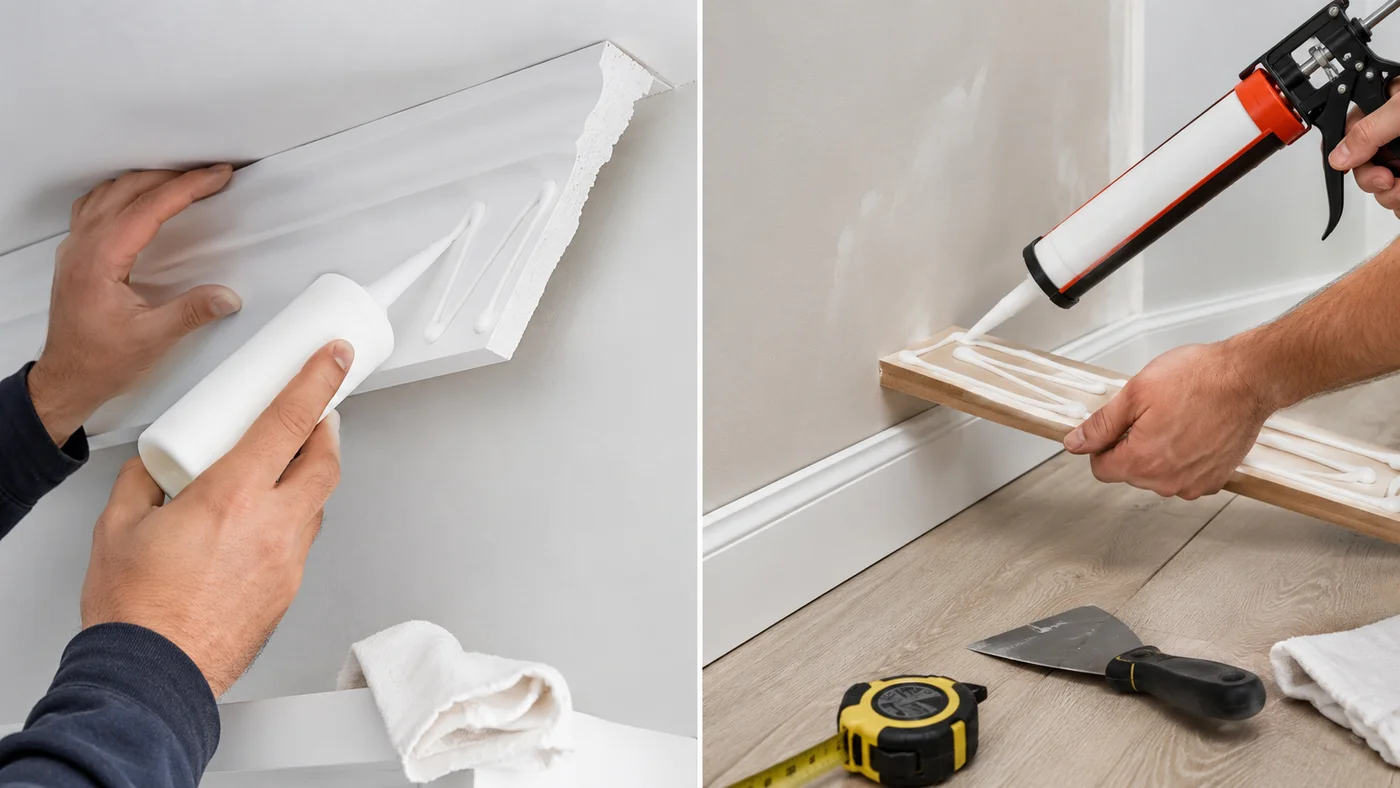
Which Product Is Better for Polystyrene?
The safest choice is an acrylic adhesive that does not damage the foam. Polystyrene may look rigid, but its chemistry is sensitive. Unsuitable solvent-containing products can dissolve it, causing depressions, ripples or deformation. For ceiling decorations, coving, decorative panels, foam trim and light coverings, make sure the product is polystyrene-compatible. The surface must be clean, dry and dust-free. Blistered wall paint, plaster dust or damp areas reduce adhesion. Even a very light foam piece can lift at the edges soon after installation if the surface is dirty. Apply adhesive to the back in spots or thin beads. Applying too close to the edges can cause overflow. Brief pressure after positioning may be enough. More adhesive does not necessarily mean better grip on foam; it can instead cause overflow and dirty surfaces. Thin, even, sufficient application gives a cleaner finish. A paintable product allows joints to be finished more attractively.
How to Choose Grab Adhesive for Skirting Boards
Consider the material first. PVC, MDF, wood and decorative polyurethane skirting boards have different bonding needs. An acrylic grab adhesive may be sufficient for light pieces. Heavier, more rigid pieces are easier to work with using a high initial-grab adhesive. Skirting boards sit close to the floor and encounter knocks, cleaning water and daily contact. An inadequate product can cause corners to open, ends to lift or boards to detach. For uneven, sloping walls or small gaps, choose a gap-filling product. It fills small spaces between board and wall for firmer contact. Long boards need extra care. Apply adhesive in a wavy or interrupted bead on the back. Supporting the board at several points after positioning gives good results. Measure corners accurately, make clean cuts and avoid forcing pieces into place; strained skirting can spring away later.
Surface Preparation and Application
Good adhesion starts with a clean surface, even before choosing the right product. Walls, ceilings and floor edges must be free from dust, grease, loose paint and moisture. Let freshly painted surfaces dry fully. Scrape blistered areas on older walls, remove dust and lightly level the surface if needed. For polystyrene, dry-fit the piece, check measurements and apply a thin adhesive layer. Position it and press gently with your palm. Heavy pressure can crush the foam. Wipe overflow promptly with a damp cloth, and do not move the piece until drying is complete. Measuring matters even more for skirting. Prepare lengths, corner angles and joints beforehand. Apply adhesive, press the board against the wall and check alignment. Temporary support at several points prevents gaps in the middle of long pieces. Tape or mechanical support is reassuring for heavy boards until the product has fully cured.
Problems Caused by the Wrong Adhesive
The wrong adhesive can reveal problems after a few days that were not apparent initially. Polystyrene can dissolve, stain, lift or slide. Skirting boards can separate at the ends, leave gaps against the wall, flex or squeeze adhesive out. An adhesive that looks strong is not necessarily suitable for foam: solvents can quickly damage it. Conversely, a product for light decorative pieces may be too weak for heavy MDF or wood. Read the packaging for material compatibility, indoor or outdoor use, drying time and paintability. As a practical guide, use polystyrene-compatible acrylic adhesive for foam, coving and light ceiling decorations. For PVC, MDF and wooden skirting, choose a grab adhesive matched to the surface. Damp areas, façades and heavy pieces may need more durable formulations. A small test reduces the risk of applying the wrong product everywhere. The right choice makes the job cleaner, helps pieces settle into position, improves joints and reduces rework after refurbishment. The best results come from understanding the material, preparing the surface thoroughly and using the right amount of adhesive.