
Can Engine Cleaning Spray Cause Damage?
Dust, oil, mud and other dirt gradually build up in the engine bay. Besides affecting appearance, they can eventually impair engine components. So can engine cleaning spray, one of the most popular products used at this stage, cause damage?
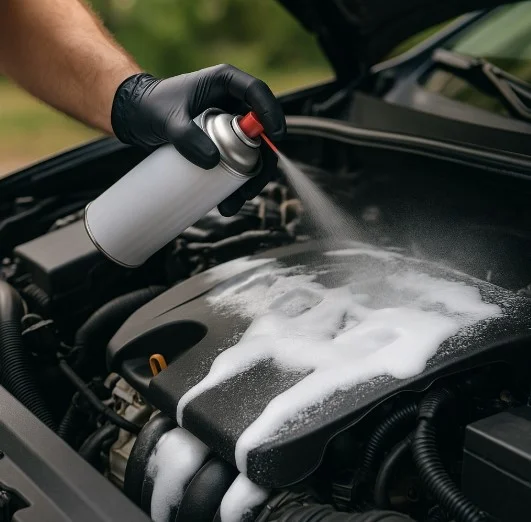
Can Engine Cleaning Sprays Be Harmful?
Engine cleaning sprays are widely used in vehicle care, but many owners wonder whether they can cause damage. Correct use is harmless: professional cleaners are formulated specifically to avoid damaging engine components. Quality sprays contain specialist chemicals that can be applied even to delicate areas. They dissolve oil, grease and accumulated dirt to help the engine operate more efficiently. Like all chemicals, however, they have risks. Incorrect use can be hazardous, particularly if unsuitable sprays are applied directly to electronics and cause short circuits. Strong solvents in some cleaners can weaken rubber hoses, seals or plastic fittings. Before cleaning, make sure the engine has cooled completely. Protect sensitive electronic components, sensors and connections according to the vehicle manufacturer’s instructions; do not use conductive aluminium foil. Wear protective gloves and eye protection, and work in a well-ventilated area. Allow the engine to dry completely before starting it.
Common Misconceptions About Engine Spray
Many owners have misconceptions about engine care. A common one is that spray damages the engine. In fact, a quality product is safe when used correctly. Proper application does not damage the engine; it protects it and improves performance.
Another belief is that cleaning should only be done at a workshop. In fact, you can do it safely yourself. With basic precautions and the product instructions, you can clean the engine economically at home.
The belief that any spray can be used on any vehicle is particularly dangerous. Engine surfaces differ, so choose a suitable product. Selecting the right spray for your engine type and needs is critical to its long-term condition.
Frequently Asked Questions
Does engine cleaning spray damage paint?
This depends on the formulation. A product not designed for general cleaning or not compatible with paint can cause damage. Some powerful engine cleaners contain acids or solvents that can attack or dull paint. Always read the label before application. Focus on the engine areas needing cleaning and avoid spraying directly onto painted surfaces.
Does engine spray damage electrical components?
Quality products generally do not, but avoid direct spraying. Use engine spray carefully. Oil-based sprays can increase conductivity and cause short circuits. Make sure the engine has cooled before treating delicate electronics, and protect electrical areas with plastic sheeting or a cloth. Afterwards, remove excess product and allow the engine to dry completely. Always follow the manufacturer’s instructions for safety.
How often should I use engine cleaning spray?
Frequency depends on the vehicle’s environment and use. It is generally recommended when visible dirt and oil have accumulated. Depending on how intensively the vehicle is used, once or twice a year is sufficient. More frequent treatment may be needed if you drive in very dusty or dirty conditions.