Can Label Remover Damage Paint?
Label-remover sprays can be a real help on vehicles, domestic appliances and glass. Used incorrectly, however, even a helpful product can cause damage. One of the most common questions is whether label remover can harm paint.
There is no simple answer: it depends on both the remover’s chemistry and the type of paint. Let us examine the issue step by step.
Label-Remover Chemistry: The Hidden Risk
Label removers are chemical products used particularly to dissolve adhesive residue. Most contain solvents, isopropyl alcohol (IPA), limonene—a citrus-based solvent—or acetate derivatives. While dissolving adhesive, these ingredients also contact the protective clear coat. Citrus-based, natural removers are generally safe on automotive paint, but prolonged contact can cause dulling. Acetone- or thinner-based removers act quickly but may dissolve the clear coat and leave a burn-like mark. Alcohol-based products are more balanced, but carry a risk of deforming rubber and plastic. Look at what the product was designed to dissolve rather than how powerful it is. The strongest chemical is not always the right one.
Paint Type: Automotive, Household or Industrial?
Automotive paints, particularly clear-coated finishes, generally resist most removers because they have a quality protective coat. A thin clear coat can, however, develop a hazy mark. The remover’s effect varies with the paint it contacts. Matt paint can stain under solvent exposure and look uneven in the light, so extra care is needed. Household paints on walls, doors and furniture are water-based and react immediately with chemical solvents. Using remover on household furniture paint therefore almost guarantees damage. Professional detailers test on a hidden spot and inspect the result before treating a larger area.
Application: Contact Time, Location and Pressure
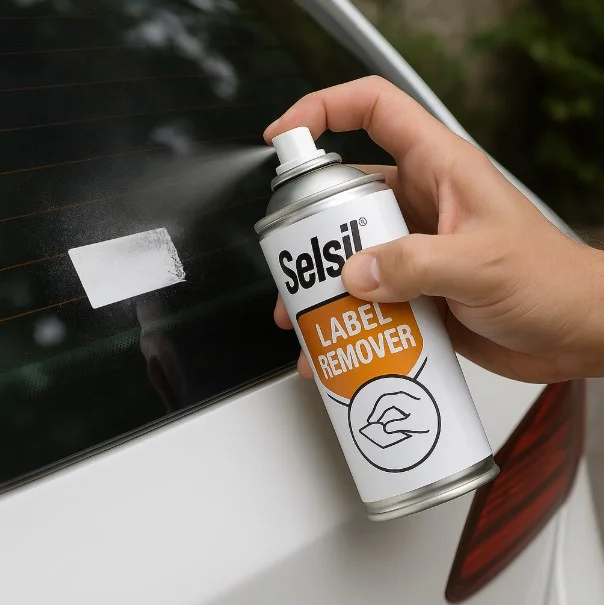
Much damage comes from incorrect application rather than the chemical itself. Follow these rules carefully to remove labels while protecting paint. First, spray onto a microfibre cloth rather than directly onto the surface; pooled chemical can damage the clear coat. Second, allow no more than 30–40 seconds of contact. Longer exposure softens the surface layer and can cause unwanted results. Lift the label with a soft plastic spatula or fingernail; metal tools or razors increase scratching risk. Afterwards, neutralise the surface with soapy water, as chemical residue can cause fading over the following days. These four simple, effective steps are used even by professionals to preserve paint.
What If the Paint Is Damaged?
Slight dulling can remain despite precautions. Do not panic: this is usually a superficial effect on the clear coat. Applying a fine scratch-removing polish for 2–3 minutes removes most marks. If a wider area is affected, a professional detailer is the safest option. Blistering or colour loss may need a local paint touch-up. Working with an expert is the best way to restore the car’s appearance in these cases.
Can Label Remover Damage Paint?
Yes, if the wrong product is chosen or applied incorrectly. The right chemical, short contact time and careful cleaning can nevertheless deliver excellent results without paint damage.
Label removal may seem simple, but every surface has its own character. Treat it appropriately to preserve both its shine and protection for longer.