
Can You Paint Wheels with Spray Paint?
Wheels can be spray-painted, and proper preparation can give a smooth, durable finish. For lasting results, remove dirt, brake dust, grease, rust and loose old paint, dull the surface and choose a primer suited to the wheel material. Apply thin coats with enough time between them. Alloy and steel wheels may require different preparation. Protecting brake discs, bolt seats and tyres is as important for safety as preparing the painted area.
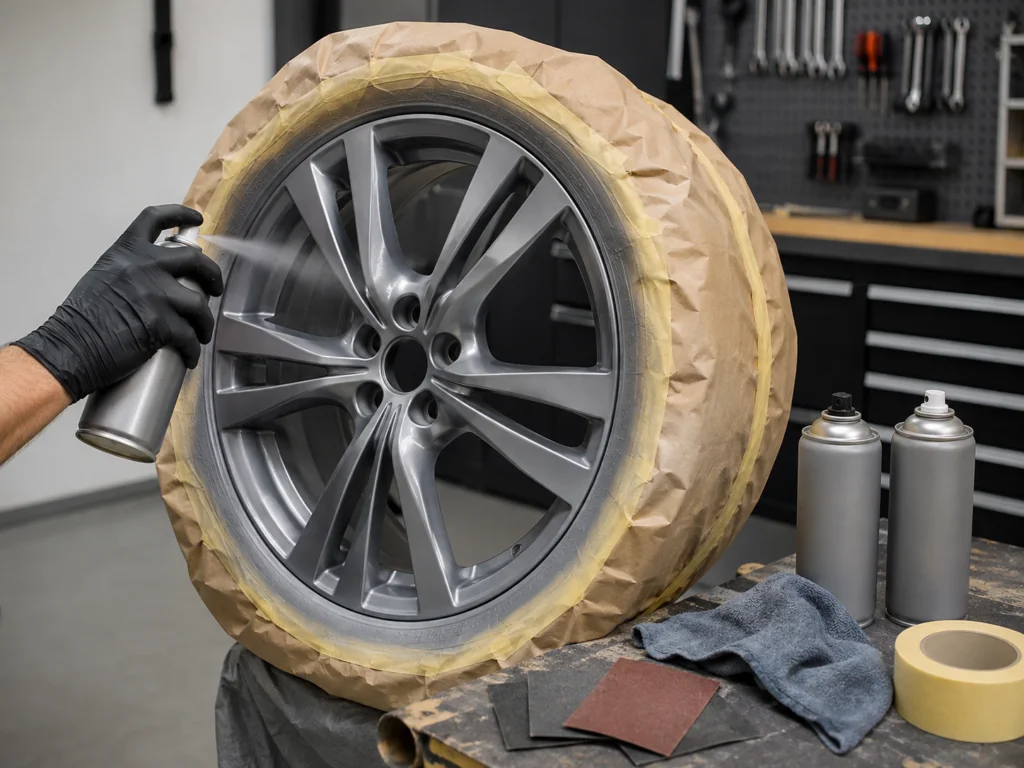
Can You Spray-Paint Wheels?
Yes, at home or in a workshop. Durability depends primarily on preparation rather than simply spraying paint. Brake dust, oil, silicone-based care products or loose coatings can prevent proper adhesion.
Acrylic products suitable for metal can refresh the colour. Selsil Rainbow Acrylic Spray Paint has a solvent-based modified acrylic formulation for metal surfaces. The manufacturer specifies a clean, dry surface free from grease and dust, removal of old paint and rust, and thin coats applied from 25–30 cm. See the Selsil Rainbow Acrylic Spray Paint options for colours and technical details.
How Do You Prepare Wheels?
Clean thoroughly first, then dry completely. Remove lifting old coating and sand glossy areas to dull them. Remove rust from steel wheels. On alloys, progressively repair areas with peeling clear coat, scratches or kerb damage.
Deep scratches will not disappear under paint. Use a repair material suitable for metal where necessary. If bare metal is exposed, a compatible primer gives a stronger base. Mask tyres, valves and brake components. Do not paint bolt or nut seating areas, the mounting face that contacts the hub or the brake disc.
How Do You Apply Wheel Spray Paint?
Use several thin passes rather than one thick coat. Shake for the specified time and maintain a constant distance. Holding the spray in one place can cause runs. Even, slightly overlapping passes give a smoother coating.
The recommended distance for Selsil Rainbow Acrylic Spray Paint is 25–30 cm. Product information gives touch drying as 5–10 minutes and full drying as 24 hours. Application temperature is 10–25°C and maximum relative humidity is 60%.
When painting four wheels, begin with a light coat rather than trying to achieve full coverage immediately. Later passes improve colour consistency. Rushing and applying a heavy coat increases runs and unevenness.
Do Wheels Need Primer and Clear Coat?
Primer depends on the surface. Bare metal, derusted steel or wheels with most old coating removed benefit from an appropriate primer. For alloys, it must suit the relevant material, such as aluminium alloy.
Clear coat can improve resistance to scratches, brake dust, stone impacts and outdoor conditions. Choose paint and clear coat that are chemically compatible. General-purpose acrylic can work for decorative restoration, but a wheel or automotive coating system may last longer under intensive use.
What Should You Look for in Wheel Spray Paint?
Consider metal compatibility, outdoor resistance, drying time and the primer and clear-coat system. Technical suitability matters as much as colour. The Selsil Rainbow range offers options such as matt black, gloss black, anthracite grey and aluminium shades for wheel applications. To compare, see the colours and products in the Selsil spray paint range.
Spray painting is a practical way to refresh wheels in sound condition. Correct product selection and preparation give a cleaner appearance. Paint does not fix bent, cracked or structurally damaged wheels: choose professional repair instead.