
How to Clean Your Car’s Air Conditioning
Air conditioning is one of the key features that make driving comfortable. Over time, however, dust, pollen and bacteria collect in the filters, air ducts and evaporator, causing unpleasant smells and potential health problems. If the system is not cleaned regularly, especially during heavy summer use, the air quality inside the car falls and conditions such as allergies can be triggered. Here is what you need to know about cleaning your car’s air conditioning.
Why Is Air Conditioning Cleaning Important?
Cleaning the air conditioning is essential for ensuring that the air it delivers is clean, particularly on long journeys. Dirty air can affect your health directly and make travel uncomfortable. Moisture and bacterial build-up are common causes of unpleasant smells; regular cleaning removes this problem and provides healthier air. A dirty filter and evaporator make the system use more energy, increasing costs and its environmental impact. Cleaning improves performance and fuel economy, helping both your budget and the environment. If pollen, mould and other particles are not removed, they can trigger asthma and allergic reactions.
What Does Air Conditioning Cleaning Involve?
- Checking and replacing the cabin pollen filter: this filters dust and pollen from incoming air. Replacement is recommended every 10,000–15,000 km on average.
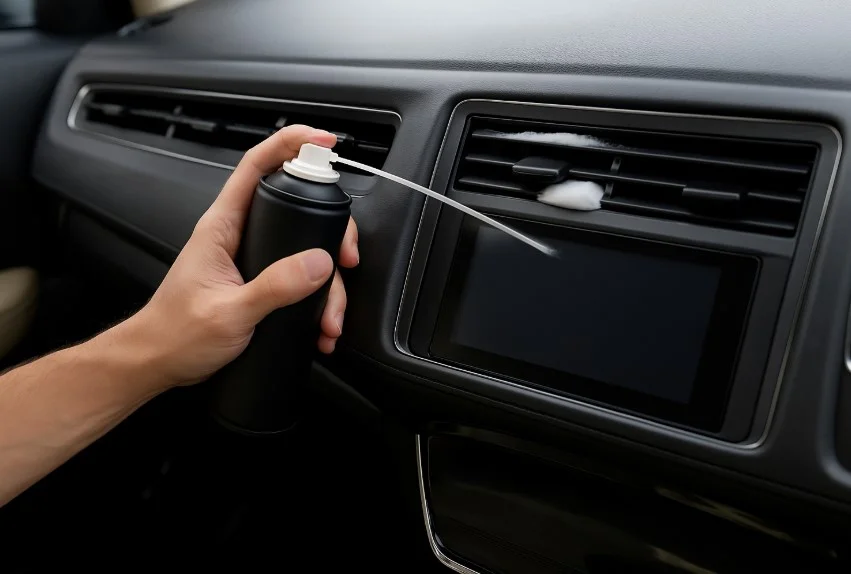
- Cleaning the ducts with spray or foam: commercially available air conditioning cleaning sprays and foams remove bacteria and unpleasant odours when applied to the ducts. After spraying, run the air conditioning to distribute the cleaner through the system.
- Cleaning the evaporator: this is where bacteria and fungi accumulate most. Professional servicing provides a deep clean.
- Ozone disinfection: ozone treatment does not guarantee removal of all bacteria and odours. Breathing ozone is harmful. If treatment is needed, a professional service with suitable equipment and safety procedures must carry it out with nobody inside the vehicle.
How Often Should Car Air Conditioning Be Cleaned?
Regular cleaning and maintenance are important for the system to work properly. With heavy use, carry out a thorough clean at least once a year. This improves efficiency and prevents unpleasant smells and bacterial growth. Check the cabin pollen filter every 6 months to help the system work correctly. The filter plays a critical role in cleaning the air and keeping the cabin fresh. If an unpleasant smell develops, act straight away. This usually indicates bacteria or fungi; left untreated, it can threaten your health and reduce the system’s performance. Regular cleaning improves driving comfort and contributes to the vehicle’s overall maintenance.
What to Watch for When Cleaning Car Air Conditioning
Cleaning matters for both hygiene and performance. Open the windows to ventilate the vehicle well during cleaning. Ventilation reduces the build-up of vapour inside; it does not prevent vapour from forming. Check the ingredients when using spray or foam. Chemicals may include substances that cause allergies, so follow the product instructions and consider your personal sensitivities. A natural product is not automatically safer. Also pay attention to any unusual noises to make sure the system is working properly. Rattling or reduced airflow may require a technical inspection as well as cleaning, as these symptoms can indicate a fault or blockage.
Frequently Asked Questions
Does cleaning the air conditioning affect fuel consumption?
Yes. A dirty filter and evaporator make the system use more energy, which indirectly increases fuel consumption.
Should air conditioning be cleaned in summer or winter?
The ideal times are before and after summer, keeping the system in good condition before and after heavy use.
Is air conditioning cleaning the same as a refrigerant recharge?
No. Recharging refrigerant improves cooling performance, while cleaning is carried out for hygiene and air quality.
Could persistent misting inside the car be related to air conditioning cleaning?
Yes. A blocked filter or dirty evaporator can prevent moisture from being removed, causing the windows to mist up.
How long does air conditioning cleaning take?
DIY spray applications take 15–20 minutes. Professional cleaning can take approximately 1 hour.