
How to Remove Paint Stains
Painting a wall, making something creative or tackling a small home repair can all start enjoyably—until paint accidentally lands on your trousers, wooden floor or sofa. How to remove the stain depends on the paint, the surface and how quickly you act. Paints are not all alike: water-based acrylic, oil-based enamel and spray paint behave very differently.
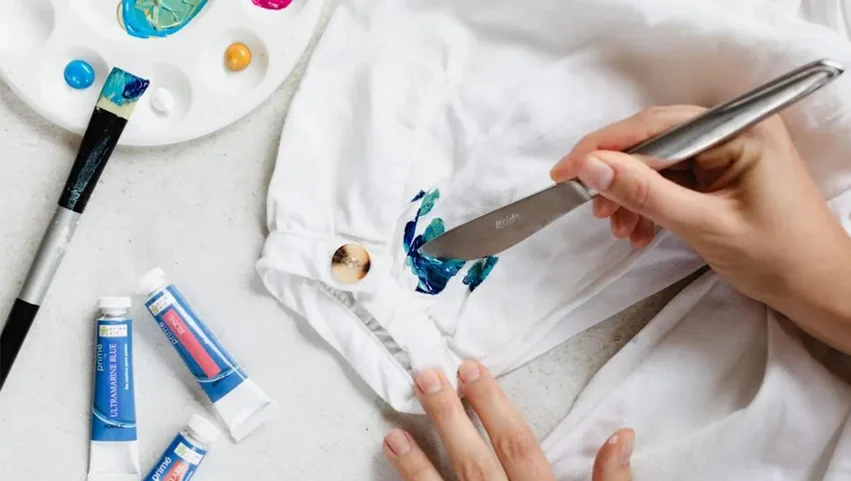
The Golden Rule for Removing Paint Stains
The first step in removing a stain is to identify what caused it. Paints fall into two main groups:
Water-Based Paints: Acrylic, Latex, Gouache and Watercolour
Because they dissolve in water, these paints offer an environmentally friendly option that preserves colours and textures. Acrylic, latex, gouache and watercolour are designed for different surfaces. They dry quickly, allowing work to be completed soon after application. If you act immediately on fabric, wood or walls, they are easy to remove, making it possible to correct accidental application without difficulty. This flexibility is a major benefit for amateur and professional artists alike.
Oil-Based Paints: Synthetic, Enamel and Varnish Paints
Oil-based paints use solvents and are generally thinned with substances such as paint thinner or acetone. Once dry, they become almost rock-hard, increasing their durability. Care is needed when using them, however, as removing them may require aggressive chemicals or professional cleaning. Looking for a single solution without making this distinction often makes a stain permanent and can have unwanted effects on the painted surface.
How to Remove Paint Stains from Fabric and Clothing
For Water-Based Paint
Water-based paints are convenient for home projects, but prompt cleaning matters when they get onto clothing. If the paint is still wet, rinse immediately with cold water. Then apply an oxygen-based stain remover or a mixture of washing-up liquid and baking soda.
Scrub in circular movements with a small brush to help separate the paint from the fibres. Leave for 15 minutes before machine washing. For dried acrylic stains, alcohol-based hand sanitiser or isopropyl alcohol softens the paint layer. You can then scrape it gently with a spatula.
After these steps, wash with ordinary laundry detergent and the stains will be removed completely. The advantage of water-based paint is that the correct methods make it easy to clean from fabric.
For Oil-Based Paint
Removing oil-based paint is difficult and can permanently damage fabric if the wrong method is used. Paint thinner or mineral spirits are used here. Rather than pouring them on directly, put a few drops on cotton wool and wipe in circles without pressing. This prevents the paint penetrating deeper into the fibres and dissolves the stain in a controlled way.
Afterwards, wash with liquid soap to neutralise it. Paint thinner can dissolve or discolour synthetic fabrics. Test on a hidden area first to protect valuable fabrics from damage. Natural fabrics generally withstand cleaning better than synthetic ones.
How to Clean Paint from Sofas, Carpets and Upholstery
On these surfaces, texture matters as much as the stain. Paint entering the fibres of fabric upholstery makes treatment more difficult. A few techniques can nevertheless deliver professional results:
Before it dries, blot excess paint with paper towels without rubbing. For acrylic paint, wipe gently with a mixture of 70% alcohol and warm water. For oil paint, use a cleaner suited to the upholstery and paint type according to its instructions. Do not mix vinegar with paint thinner or combine different cleaning products.
On carpet, sprinkle baking soda and leave for 30 minutes before vacuuming, then wipe with a soapy cloth. A steam cleaner softens paint and reduces the need for chemicals. Hot steam can work wonders, particularly on velvet or satin upholstery.
How to Remove Paint from Wood, Doors and Parquet Floors
The greatest risk on wood is removing the finish along with the paint. Paint stains on wooden surfaces, doors and parquet can be cleaned effectively with the correct technique. Identify the paint type before choosing a method. For water-based paint, a damp microfibre cloth and soapy water are ideal. Gentle application removes the stains while preserving the natural texture. Always wipe along the grain. For oil-based paint, a mixture of lemon juice, olive oil and a little acetone both cleans and polishes. Apply the acetone locally with cotton wool rather than directly, then immediately wipe dry. This method works even on stubborn stains and does not disturb the wood’s moisture balance.
Removing Paint from Metal, Glass and Plastic
Different methods remove paint effectively from metal, glass and plastic. On glass, use a razor-style scraper and glass cleaner. First warm the paint with a hairdryer to soften the layer and make it easier to scrape.
On metal, wipe with WD-40 or paint thinner, then dry with a cloth to prevent rust. This is an important protective step.
On plastic, use an alcohol-based cleaner: paint thinner can dull the surface. With the right products, paint can be safely removed from all surfaces without damaging them.
What If You Leave the Stain Too Long?
Dried paint forms a polymer layer. Chemical cleaning alone may therefore be insufficient; mechanical methods such as scraping, sanding or heat may also be needed. Without care, however, you risk scratching or discolouring the surface.
Professional cleaners generally use:
- A hot-air gun for heating.
- Fine sanding.
- A solvent suitable for the surface.
To achieve similar results at home, test on a small area before treating the entire surface.