
How to Stop a Door Squeaking
A squeaking door is one of the most irritating household sounds. The metallic noise when someone opens a door in a quiet room or at night is more than annoying: it also shows that the hinges need maintenance.
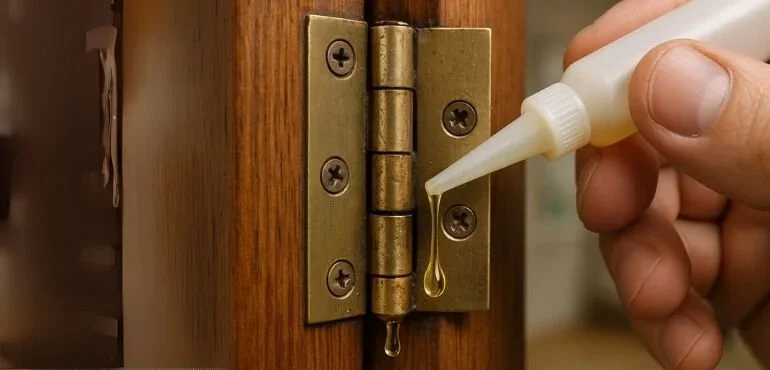
How to Stop a Door Squeaking
Why Do Doors Squeak?
Many people assume a hinge simply needs oil, but the cause is often more complex. Metal wear is one possibility: hinge pins rub over time, creating microscopic surface damage. This can prevent smooth operation and cause noise.
Dust and moisture are another factor. They form a thin rust layer in hinge gaps that restricts movement. Incorrect lubrication can also cause squeaking. Unsuitable lubricants or those leaving sticky residue can collect dirt. Silicone-based lubricants do not all behave in the same way.
Loose screws or uneven installation can make the sound worse. When hinges do not share the load evenly, friction points change and squeaking increases.
An Effective, Lasting Solution: The Right Lubricant
The most lasting way to stop squeaking is a spray that dissolves rust and displaces moisture. With many products available, choosing correctly matters.
Why Choose a Silicone-Free Product?
Choose a lubricant suited to the hinge material and maintenance instructions. Not every silicone-based spray leaves a dirt-attracting film. An unsuitable product or one that leaves sticky residue may cause dirt to build up.
Recommended product: Selsil Rust Remover and Lubricant Spray
Its specialist silicone-free formula both cleans and protects metal. It effectively tackles everyday rust and squeaking and is ideal for hinges. Rust removal clears oxidation from hinge pins, while a thin protective film prevents moisture contacting metal.
It reduces friction and makes door movement quiet. Designed for professionals, its easy application is also practical at home. It does not attract dirt, helping hinges maintain their original performance. Afterwards, you will notice quieter operation, easier hinge movement and improved door balance. Also chosen in industry, it can be used confidently for metal maintenance.
- Open and close the door several times to identify the noisy hinge.
- Slightly withdraw the hinge pin. If this is impossible, apply directly into the gap.
- Spray into the gaps and wipe away excess with a cloth.
- Open and close the door several times to distribute the lubricant.
- Repeat if necessary. Results depend on the hinge’s condition. If the noise continues, check for wear or another mechanical problem.
Also check hinges at least twice a year for quiet operation and lasting use.
Does Moisture Increase Squeaking?
Yes. Higher humidity, particularly in autumn and winter, can accelerate rust formation. Regular seasonal maintenance therefore reduces squeaking and extends door life.
What if squeaking returns after lubrication?
The hinge pins may be excessively worn. If the noise remains despite spraying, hinge replacement may be needed.
Can it also be used for squeaking household appliances?
Yes, but unplug the appliance first. Selsil Rust Remover and Lubricant Spray can be used safely on household appliances and small motors.
Does it work on wooden doors?
Yes. Door material does not matter because the noise comes from the hinge. The product contacts only metal and does not damage the wood.
How often should it be applied?
Twice a year on household doors, or every 3–4 months in damp areas such as bathroom doors.