What Are Hybrid Sealants, and What Are Their Benefits?
Durable, flexible and environmentally friendly solutions are increasingly important in construction and repairs. Hybrid technologies and sealants are among them. What does hybrid mean, and what benefits do hybrid sealants offer? This article explores the concepts in depth, along with their uses and advantages.
What Does Hybrid Mean?
A hybrid combines two or more materials with different properties to create a new product with improved performance. By bringing together their best qualities, hybrid products offer superior durability, flexibility, environmental benefits and a long service life. Hybrid technology is used in building materials, automotive work, electronics and construction.
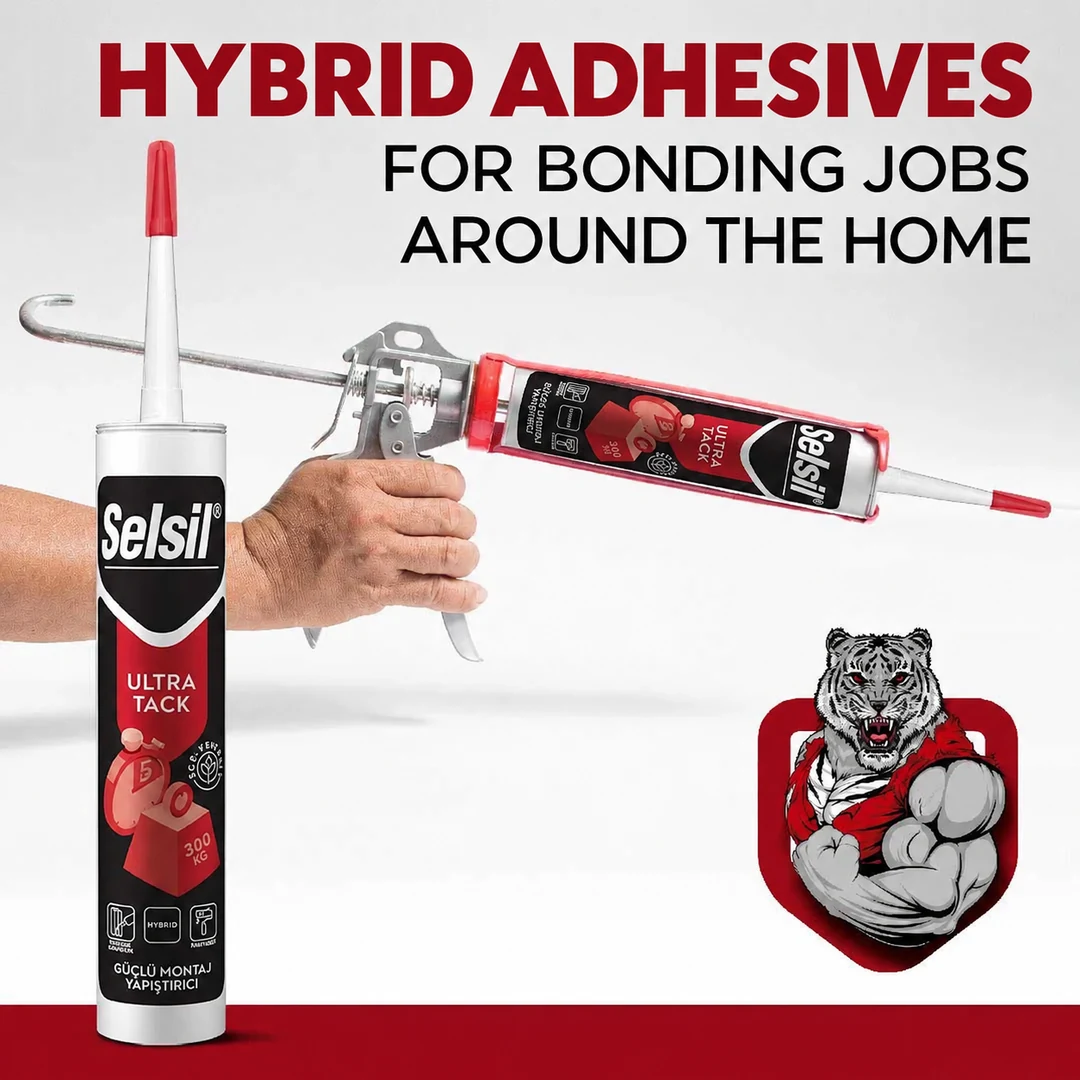
Hybrid sealants developed within this field are used for bonding, filling and sealing in construction. Hybrid sealant is not defined as a single polyurethane–acrylic blend; different polymer technologies exist. Selsil Ultra Tack and Ultra Clear are moisture-curing, silane-terminated polymer products. Assess VOC and solvent properties according to the selected product’s information.
General Properties of Sealants
Sealants are strongly adhesive materials used to join and seal building materials. Their general properties include:
- High adhesion.
- Resistance to water, moisture and weather.
- Easy compatibility with different surfaces.
- Lasting flexibility and strength.
- Easy application.
- Crack and gap filling.
Polymer structure, solvent content and resistance to environmental conditions vary by product. Not all conventional sealants are solvent-based. When choosing a hybrid, compare the required surface compatibility and operating conditions with existing products.
Benefits of Hybrid Sealants
Nearly Odourless and Environmentally Friendly
Low VOC content makes hybrid sealant almost odourless. Its solvent-free formulation is safer for installers and end users, making it ideal for environmentally conscious projects.
Excellent Adhesion
Hybrid sealants can be used on surfaces such as metal, wood, suitable plastics, concrete and stone; compatibility depends on the product. Follow its stated application scope indoors and outdoors, for wooden stairs and cupboard installation, or in suitable wet areas. Application to a damp surface is different from continuous underwater use. Check the specific conditions for pools and boats; Ultra Clear is not recommended for areas continuously exposed to water.
Solvent-Free Formulation
Selsil Ultra Tack contains no solvents. A solvent-free formulation does not guarantee zero volume change or expansion in every product. Assess filler behaviour and long-term durability alongside the product’s technical values and joint movement.
Paintability
Paintability depends on the selected hybrid sealant’s product information. Selsil Ultra Tack can be painted with different paints, including water-based types. Check paint and sealant compatibility, application timing and joint movement according to the product instructions.
UV Resistance
Many sealants deteriorate in sunlight. Hybrid sealants offer high UV resistance and lasting performance on facades.
Smooth, Non-Porous Finish
They create a smooth surface. Because no carbon dioxide forms inside, the material does not become porous, giving excellent appearance and water sealing.
No Static Build-Up
Unlike silicone-based adhesives, hybrid products do not build up static electricity. This minimises dust attraction and preserves a cleaner appearance.
Where Are Hybrid Sealants Used?
Their applications are extensive:
- Waterproofing projects.
- Exterior cladding.
- Joint filling.
- Wood, metal and plastic installation.
- Pool and boat construction.
- Wet areas such as bathrooms and kitchens.
Resistance to water, UV and weather has made them essential for industrial and personal projects alike.
Hybrid Sealant for Joint Filling
They offer ideal solutions where two different building materials meet. Flexibility and strong adhesion prevent cracks and leaks while giving a neat finish.
How Do You Use Hybrid Sealant?
Follow these points:
- Prepare the surface: remove all dust, dirt, grease and residue.
- Lightly dampen if necessary: in some applications, slight dampening improves adhesion.
- Apply: dispense an even bead with a gun and spread it with a spatula.
- Allow drying: observe the manufacturer’s time for full performance.
Correct application creates a strong, secure joint that lasts for years.
Structural Properties of Hybrid Sealants
Hybrid sealants use different polymer technologies. Selsil Ultra Tack and Ultra Clear are silane-terminated polymer products; they are not defined by simply blending polyurethane, acrylic and silicone. Check solvent and VOC information, elasticity, adhesion and applications against each product’s formulation.
Strong, Environmentally Friendly Solutions
Durability and environmental benefits have made hybrid sealants a standard in modern building projects. Hybrid technology provides reliable, lasting and environmentally friendly solutions for professionals and DIY users. With superior protection against water, sunlight and impacts, they will remain essential to modern construction and repairs.
Choosing the right product and applying it correctly make a major difference to appearance and durability. Quality hybrid sealant helps keep structures sound for years.