Industrial Adhesives for Steel and Metal Surfaces
Metal surfaces can be joined securely with high-performance adhesives as well as traditional methods such as welding or screws. Steel and metal adhesives save time in industrial production while providing durable, lasting joints.
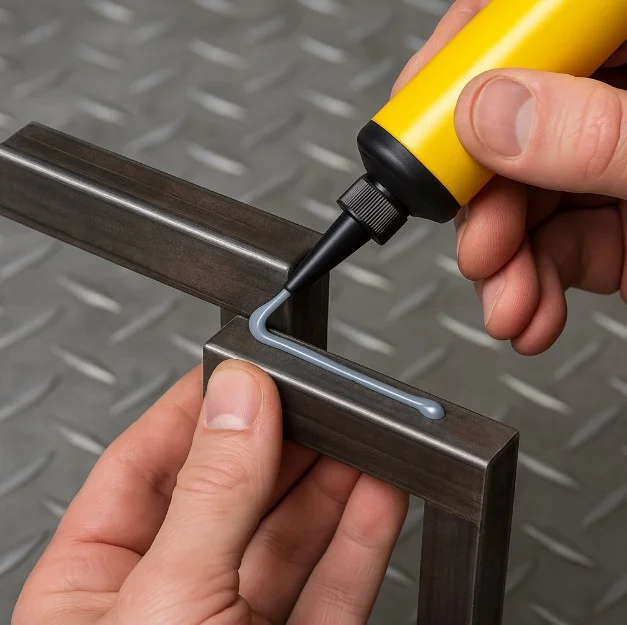
The hard, smooth nature of metal makes effective bonding with ordinary adhesives difficult. Specialist metal adhesives therefore provide strong bonds between metals such as steel, aluminium, copper and brass, and between these metals and other surfaces.
What Are Metal Adhesives Used For?
Metal adhesives are used widely, particularly in automotive, domestic appliance, electronics and machinery industries. By providing a solution that does not require welding, they shorten production times and reduce labour costs. This faster, more convenient alternative to traditional welding is especially useful in mass production. Properties such as high temperature resistance, chemical resistance and strength under impact provide reliable performance even in demanding environments. Steel adhesives are therefore frequently chosen in heavy industry and for assembling metal components carrying high loads. These qualities allow users to create safe, durable joints.
Properties of Metal Adhesives
Steel adhesives used in modern production offer more than strong adhesion: they also provide convenience and flexibility. Key benefits include:
- Excellent initial grab and fast curing.
- Resistance to friction, impact and vibration.
- The ability to be drilled and shaped after curing.
- Lasting, permanent joints.
- High compatibility with metal surfaces.
Metal-filled epoxy adhesives are specially formulated for gap filling, crack repairs and durable surface restoration.
Industrial Uses of Metal Adhesives
In machinery and equipment repairs, metal adhesives are an essential way to fix cracked or broken parts quickly and securely. In furniture and domestic appliances, they are frequently used to join or secure metal components. The automotive industry uses them to create vehicle-part joints that resist vibration and impact. In construction, they create strong bonds when fitting or repairing steel supports. Electronics manufacturing also uses them for precise bonding of metal-based components.
What Should You Consider When Choosing Metal Adhesive?
Consider the intended use and environmental conditions carefully. Steel adhesive should be chosen for applications requiring particularly high strength. Where extreme temperature, moisture or chemical contact create demanding conditions, an industrial-grade metal adhesive is necessary. These products offer superior performance against environmental factors and provide lasting joints. Products with short cure times improve efficiency when rapid assembly is needed, drying quickly after application to speed up the workflow. Product form matters too: liquids, putties and two-component epoxies address different needs.
Repairs with Metal-Filled Epoxy
Some industrial jobs need more than bonding: gaps may need filling, surfaces levelling or cracks repairing. Metal-filled epoxies address these tasks. Their specialist formulations allow you to:
- Repair cracks in cast parts.
- Rebuild worn surfaces.
- Permanently fill gaps such as bolt or screw holes.
Once fully cured, epoxy-based metal fillers can be machined, drilled, sanded or painted. This makes them essential for both repairs and production.