
What Happens If You Apply Too Much Expanding Foam?
Expanding foam is a practical material widely used around door frames and windows, at service penetrations and for filling gaps. Applying too much in an effort to work quickly can turn a small overflow into a bigger problem. The excess expands as it dries, marks surrounding areas, sticks to finishes and can exert enough pressure to stress a frame. The good news is that cleaning is easier if you notice the problem early. Dried foam can also be dealt with, but it needs a different method.
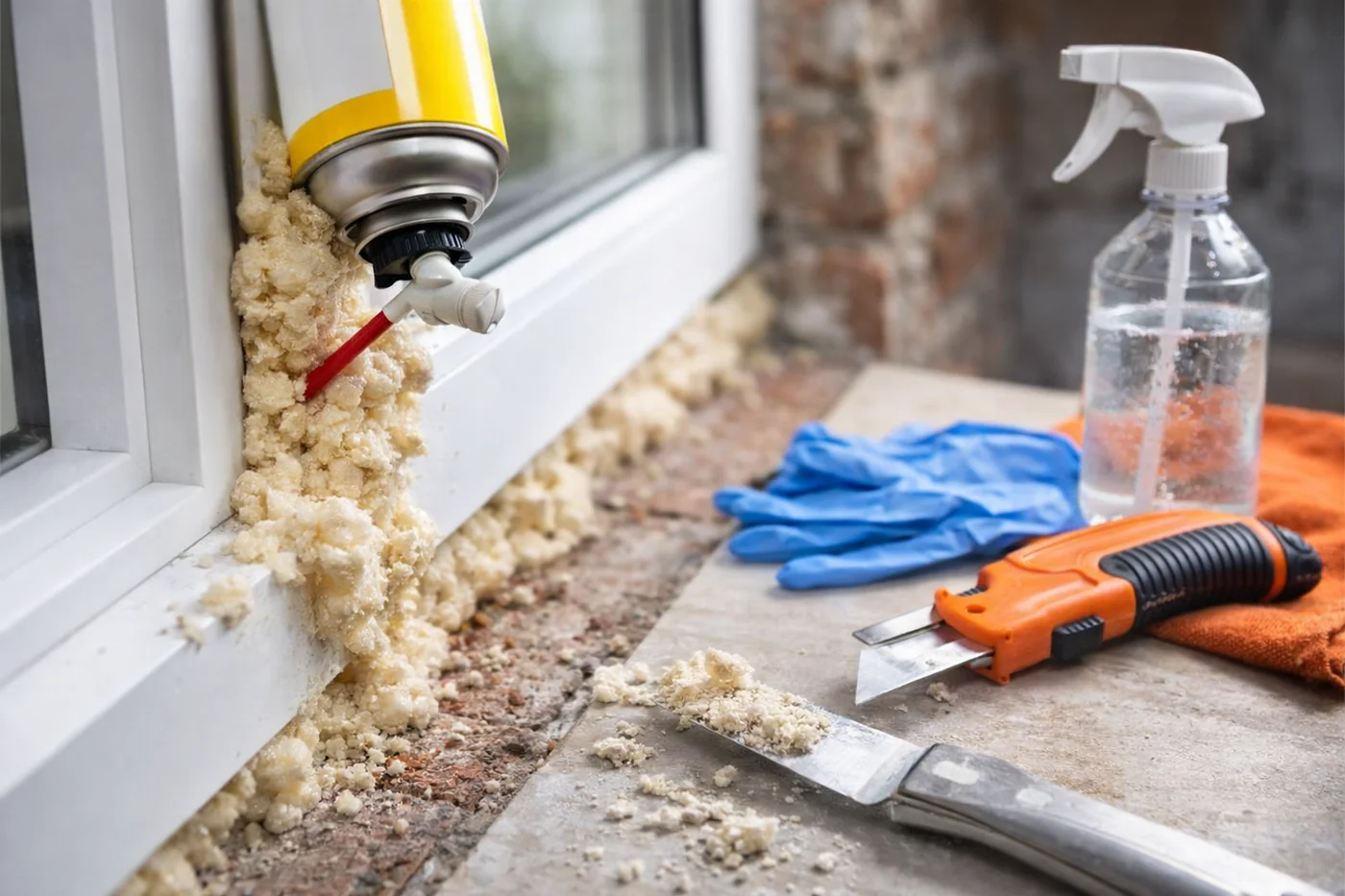
Why Does Expanding Foam Overflow?
The main reason is that the product gains volume after application. The amount you see as you dispense it is not the volume it reaches a few minutes later. Inexperienced users often try to fill the entire gap. Apply expanding foam more sparingly, allowing room for expansion. Too much gun pressure is another mistake. Holding the nozzle too close or dispensing in one place for too long produces uneven distribution. Temperature and moisture also affect the foam’s behaviour, and the expansion rate can change with the weather. Starting with a small amount is easier than dealing with excess later.
What Happens If You Apply Too Much Foam?
The most common problem is overflow onto surrounding surfaces. Hard residue can form on painted walls, window edges, marble, ceramics or door frames. Appearance is the first issue you notice, but it is not the only one. Excess foam can put pressure on door and window frames. Even slight bending can affect opening and closing, causing rubbing, sticking or loss of alignment. Uncontrolled application around electrical and plumbing services can unnecessarily block areas that need maintenance. If the foam later needs cutting away, the underlying surface may be damaged. Extra product creates repair work rather than making the job stronger.
What Problems Can Occur Around Doors and Windows?
These areas need particularly careful application. Too much foam in narrow gaps can load the frame as it expands. Slight bending may not be apparent immediately. You may notice later that a door no longer sits properly, its handle feels stiff or a window rubs when closing. Overflow on PVC also spoils the appearance. Using hard metal to remove cured residue can scratch the surface. Varnish or paint on wood can be damaged too. In areas needing a fine finish, controlled application matters as much as cleaning. A professional result usually comes from preventing overflow rather than using more material.
How Do You Clean Fresh and Cured Foam?
The cleaning method depends on whether the foam is still wet or has hardened. This is the most important distinction.
- While it is wet, remove excess with a clean, dry cloth. Blotting works better than wiping and spreading it.
- On suitable surfaces, use foam cleaner or acetone-type solvents. Test a small area first.
- For cured foam, start with mechanical removal. Carefully cut away overflow with a plastic spatula, craft knife or blunt scraper.
- Avoid hurried pressure on glass and PVC, as it can cause deep scratches.
- If foam contacts skin, wipe fresh foam away promptly, then wash with soapy water. Forcing dried foam off the skin can cause irritation.
- Dried foam on fabric often leaves a permanent mark. At that stage, there is little scope beyond carefully separating the hard material.
Speed matters with fresh foam; patience matters once it has cured. Correct treatment in the first minutes greatly reduces later cleaning work. With hardened residue, gradual removal in layers is safer.
What Should You Consider for Different Surfaces?
Surfaces react differently. Glass, ceramics and metal are usually easier to clean. Paint, lacquer, wood, laminate and plastic need more care. Strong solvents can dull finishes or cause discolouration. Random chemicals are also a poor choice for marble and natural stone, whose porous structure increases the risk of staining. Pulling cured foam off a painted wall can lift the paint underneath and require a small touch-up. Slow, careful cleaning gives better results on delicate surfaces than force. Testing a small, hidden area first reduces most risks.
Practical Tips for Cleaner, Safer Application
Overflow can be corrected, but preventing it is easier. Removing surface dust first helps the foam adhere more evenly. Rather than filling the whole gap, filling roughly one-third to one-half is often more appropriate. Low-expansion products make door and window installation more manageable. With a gun, short, controlled bursts leave a cleaner line. For large gaps, applying in layers is safer than filling heavily in one pass. Masking tape also makes edge cleaning easier. Good results depend on judging the amount needed, rather than dispensing as much as possible. Even a small job at home benefits from a calm approach, which is one of the most important factors in the final appearance.