What Is Cyanoacrylate?
Cyanoacrylate may be an unfamiliar chemical name, but it is something we use often. In Turkish, this powerful adhesive is commonly called “Japanese glue”, leading many people to assume it was invented in Japan. In fact, the American Dr W. Coover discovered it in 1942. He initially intended to use it for transparent plastic gun sights for military equipment rather than as an adhesive. Once its remarkable bonding properties were recognised, it was marketed as the super glue we know today. What exactly is cyanoacrylate, and where is it used?
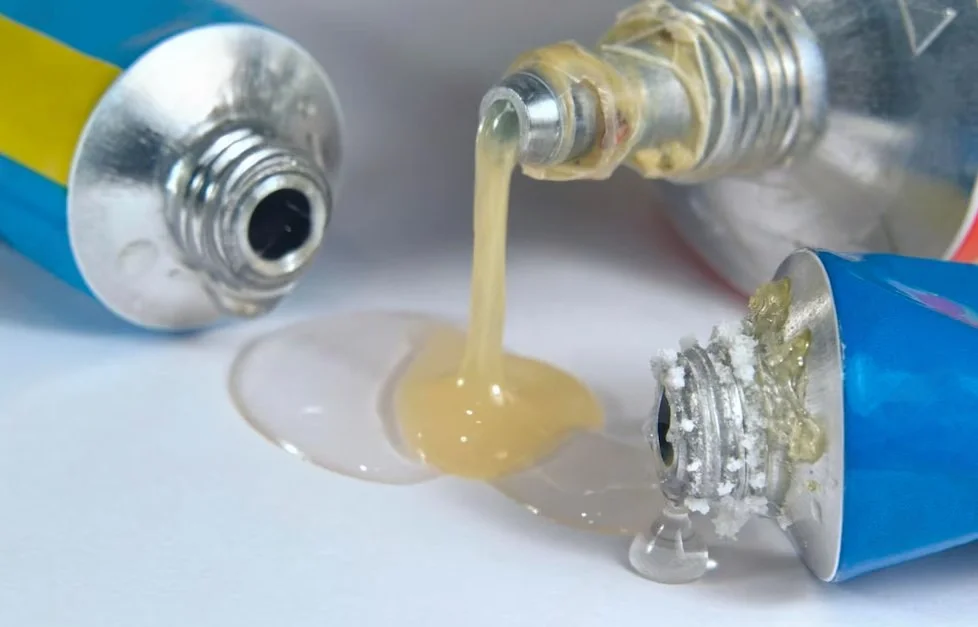
Cyanoacrylate Chemistry (CH₂=C(CN)-COOR)
Cyanoacrylate is a highly effective adhesive because of its chemical composition. Its structure contains an electron-withdrawing cyano group (-CN) and an ester group (COOR) attached to the central carbon atom. This distinctive molecular arrangement is the key to its ability to form fast, durable bonds.
Cyanoacrylate adhesives consist of monomers that react with electron-rich substances. When applied, they polymerise very rapidly in response to surrounding moisture, forming a solid polymer layer between two surfaces. This layer holds the parts firmly together. Such rapid polymerisation is why cyanoacrylates are known as instant adhesives. For high viscosity, fast curing and multi-surface use, Selsil Ninja Superfast Adhesive and Ninja Super Glue deliver maximum performance in professional applications with their cyanoacrylate-based formulations. Their broad range of uses extends from industrial repairs to fine craftsmanship.
Properties of Cyanoacrylate
Cyanoacrylate stands out among modern adhesives for several benefits. First, its fast setting allows it to solidify in seconds, helping users finish work quickly. Its strong adhesion creates durable bonds, particularly on rigid surfaces, and provides reliable performance when joining different materials. Once dry, its transparency makes it an attractive choice, leaving an invisible finish at the application point.
Its ability to flow into fine gaps also makes it useful in intricate and confined areas. Moisture activation means that contact with moisture in the air or on a surface quickly starts the bonding process.
Where Are Cyanoacrylate Adhesives Used?
Cyanoacrylates have a broad range of industrial and everyday uses. Applications vary, but they are commonly chosen to bond porous and non-porous materials such as metal, plastics (PVC, ABS, polystyrene), wood, ceramics, tiles, porcelain, leather, rubber, cork and cardboard. Their fast drying and strong bonding make them common in electronics for assembling small parts. Specific cyanoacrylate formulations are used as tissue adhesives in medicine, particularly surgery. The automotive industry uses them for practical small-part and emergency repairs. At home, they help with everything from repairing broken objects to hobby projects.
- Fast repairs to metal parts
- Permanent joining of plastic surfaces
- Repairing breaks in wooden objects
- Repairing cracks in ceramic and porcelain items
- Fast bonding of rubber and leather