
What Is Grout, and How Do You Apply It?
The character of a room often depends on details rather than large surfaces. The narrow joints between tiles may seem unimportant at first, but they shape the room’s hygiene, durability and appearance.
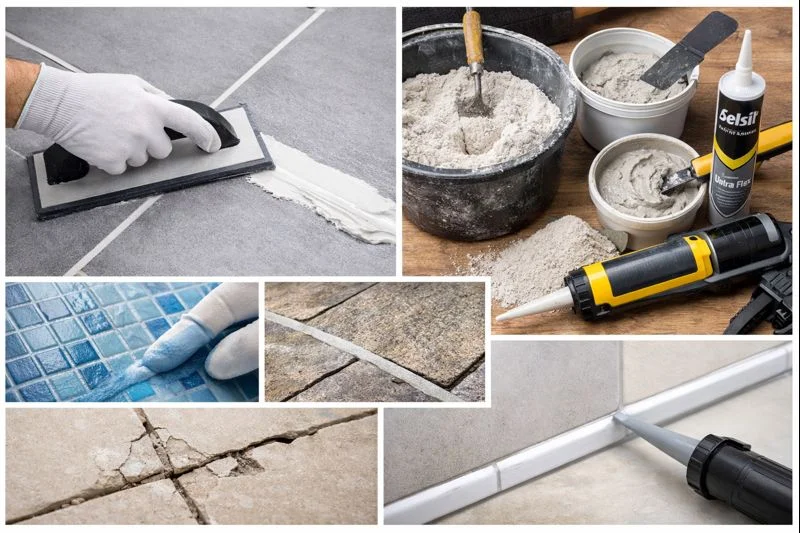
What Is a Tile Joint?
A joint is the controlled gap left between ceramic tiles, granite or natural stone coverings. This technical detail is essential to modern building systems. The gaps allow building elements to respond to temperature changes, vibration and load distribution. Joints are particularly important in regions with large seasonal temperature differences. Leaving them unfilled or filling them incorrectly eventually causes cracks, water leaks and mould. Professional application and quality materials are essential for a long-lasting finish.
How Do You Apply Grout?
The process involves more than taking material from a bag and spreading it with a trowel. For professional results, follow these stages:
Surface Preparation
Remove all dust, adhesive residue and moisture from the joints using a brush and vacuum. The surface must be dry. If this step is missed, even the best grout will soon crumble out.
The Right Consistency
Mix the grout in the proportions recommended by the manufacturer. Overly wet mixtures crack and lose durability. Mixtures that are too dry do not penetrate fully and fail to provide the required adhesion.
Application Technique
Use a rubber float in diagonal movements to spread the material evenly. Fill the joints completely according to the product instructions. Work into the joint rather than concentrating on the surface. Grout alone is not a waterproofing system; where waterproofing is required, install a suitable system beneath the covering separately.
Timing the Clean-Up
Clean once the grout has partly set and light finger pressure no longer leaves a mark. Use a damp sponge, and get the timing right. Cleaning too early removes grout that has not hardened enough. Cleaning too late leaves stains that are difficult to remove. Timing is essential for a professional finish.
Types of Grout
Many types are available, and they do not all suit the same job:
Cement-Based Grout
A traditional product widely used with ceramic tiles, cement-based grout is economical and readily available. It is ideal for areas with low to moderate traffic and can be chosen confidently for domestic interiors, bathrooms and kitchens. It is easy to apply and offers a practical solution.
Epoxy Grout
Epoxy grout offers exceptional resistance to chemicals, stains and heavy water exposure. This allows excellent performance in wet and demanding environments. It is essential for industrial kitchens and swimming pools, and a dependable choice where hygiene and durability are needed.
Flexible Grout
Flexible grout prevents cracking in areas with substantial structural movement, providing lasting solutions in buildings. It is particularly popular on large surfaces and outdoors.
A Professional Alternative for Flexible Joints: Selsil Ultra Flex
Where joints experience heavy movement and conventional fillers crack over time, modern hybrid solutions provide an answer. Selsil Ultra Flex Flexible Mounting Adhesive goes beyond conventional grout. Selsil Ultra Flex is a high-performance, single-component, moisture-curing hybrid sealant. It combines the mechanical advantages of polyurethane sealant and silicone, while containing neither isocyanates nor solvents.
- High flexibility provides excellent joint filling and bonding without loss of elasticity.
- Can be used confidently indoors and outdoors on all surfaces and materials.
- Resistant to weather and ageing.
- Can be painted with various paints, including water-based types.
It offers a strong alternative for anyone seeking an attractive, lasting solution at tile-to-floor junctions, corner joints and moving surfaces.
For detailed product information: Ultra Flex Flexible Mounting Adhesive
Why does grout crack soon after application?
Inadequate surface preparation is a leading cause. Choosing the wrong grout and overlooking structural movement are other important factors. When these errors combine, joints soon lose durability and crack.
How soon can the area be used after grouting?
Cement-based products can generally be used after 24 hours. Epoxy and hybrid products may need shorter or longer, depending on the manufacturer’s instructions.
What can you do if joints develop mould?
The problem is often constant water contact rather than the joint itself. Choose flexible, water-resistant products for areas where mould develops.
Can you apply new grout over old grout?
Technically, yes. For lasting results, however, removing the old grout and preparing the surface again is recommended.