
Which Drain Unblocker Is the Strongest?
Blocked sinks are a common, frustrating household problem. They stop water flowing and can also cause unpleasant smells. Effective chemical toilet and sink unblockers can resolve the issue, but choosing the right product and using it correctly are essential.
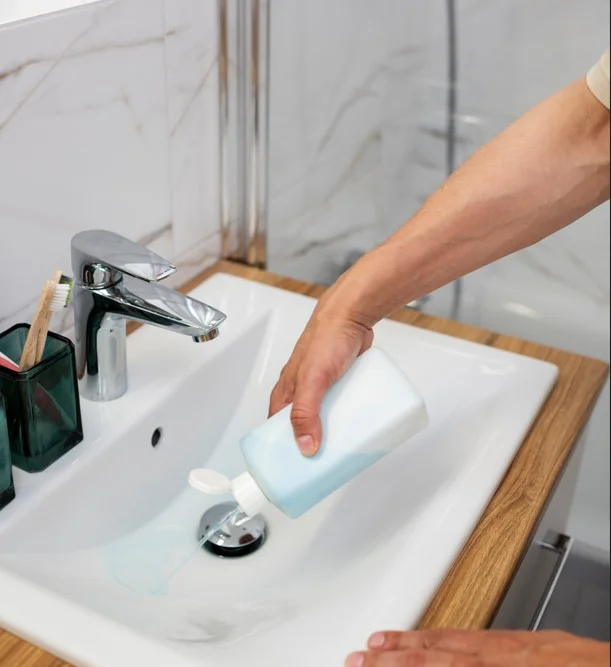
What Is a Drain Unblocker?
Drain unblockers are cleaning products whose chemical ingredients help dissolve grease, soap residue, food scraps and other organic matter that collect in pipes. Their quick, practical solutions have made them popular. Remember that not all unblockers have the same effect.
Which Drain Unblocker Is the Strongest?
Blocked household sinks often lead people to ask which unblocker is strongest. Mild chemicals are sufficient for household sink blockages because they are designed for simple domestic problems. In some cases, however, they may be inadequate.
Drain chemicals are used in many settings. More serious blockages, particularly in industry, require stronger sink-unblocking chemicals. Industrial sinks face larger and more complex blockages, so stronger formulations are needed.
Household unblockers generally contain milder chemicals, while industrial products have more concentrated, powerful formulations.
- Liquid or gel unblockers: suitable for lighter blockages, easy to use and fast-acting.
- Acidic unblockers: more effective on severe blockages but require careful use.
- Powder unblockers: help dissolve deposits adhering to pipes.
- Capsule unblockers: a practical, effective option with a modern design.
When choosing the most effective toilet or sink unblocker, consider the severity of the blockage and the sensitivity of your pipework.
How Do You Unblock a Sink?
Start by identifying the cause. For a shallow blockage caused by organic matter, try hot water to help dissolve grease and soap residue.
For deeper, stubborn blockages, consider a drain unblocker. Its chemicals dissolve deposits and restore free water flow. Read the instructions carefully and take the appropriate precautions before use. Pour the product into the sink, wait for a while and rinse thoroughly with water.
You can try the following steps:
- Hot water: an initial option for minor blockages.
- Natural unblocker: baking soda and vinegar are a good choice for light blockages.
- Chemical unblocker: an option for more serious blockages. Read the instructions carefully and take all necessary precautions first.
- Mechanical methods: try physically removing the blockage with a sink plunger or drain-cleaning wire.
- Professional help: contact a plumber for a very serious blockage.
What Should You Do If the Kitchen Sink Will Not Drain?
A blocked kitchen sink can disrupt everyday life. Natural products may help. First, put some baking soda into the drain and add white vinegar. The foaming reaction can help clear the blockage. Finish by adding some hot water and wait for the blockage to clear.
Grease, food scraps and soap residue can cause serious kitchen sink blockages.
- Use baking soda and vinegar to try clearing the blockage naturally.
- If a chemical unblocker is needed, follow its instructions carefully to avoid pipe damage.
- Have the plumbing checked for recurring blockages.
Watch the amount of water you use with natural methods. Too much can make the situation worse and cause overflowing. If the water does not drain after your first attempt, do not make second or third attempts. Seek professional help immediately to avoid further problems. Experts can identify the cause and provide the right solution before it worsens.
Choose the strongest unblocker according to your needs and follow its instructions. Prevent blockages by caring for sink drains and cleaning regularly.