
Why Does Spray Paint Run? Tips for a Smooth Finish
Paint runs are common when refreshing furniture, metal accessories, plant pots, shelves and decorative objects. They may seem minor, but the trails they leave make careful work look untidy. Most runs have a few basic causes: thick coats, spraying too close, humidity, incomplete surface preparation and insufficient time between coats. Technical guides likewise recommend thin coats, a steady distance, continuous movement and suitable weather for a smooth finish.
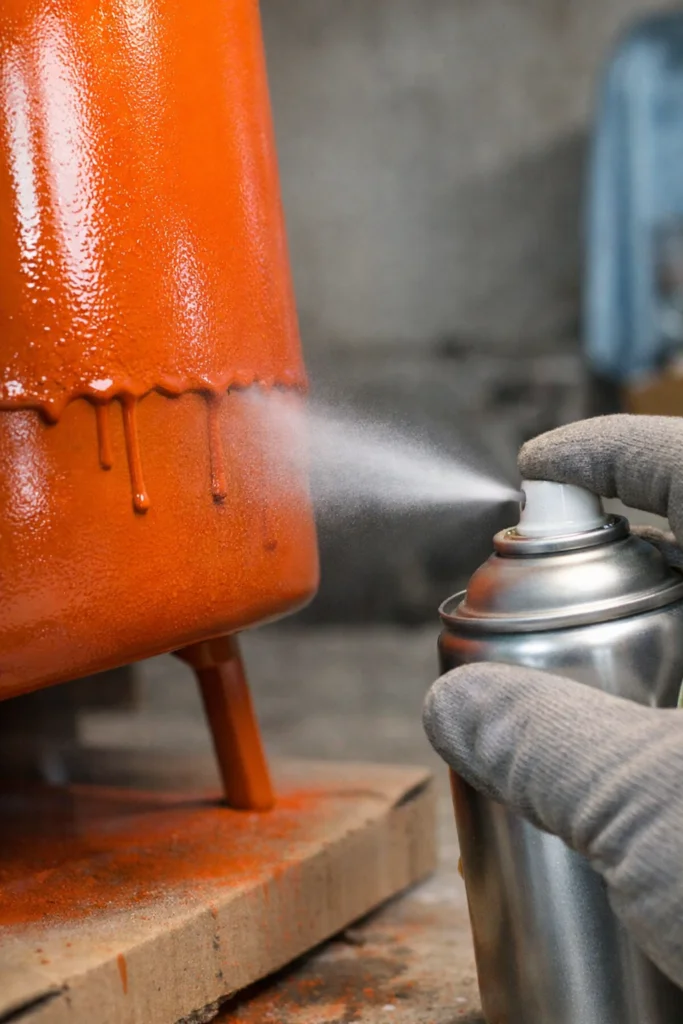
The Most Common Causes of Spray Paint Runs
The main cause is putting too much paint onto the surface too quickly. Instead of spreading as a fine mist, it builds into a wet layer that gravity pulls downwards. Holding the can too close deposits excessive paint in one area. Pausing your hand or slowing down at turns causes the same problem. Manufacturers repeatedly emphasise keeping the can moving, overlapping passes slightly and applying several light coats. A smooth finish usually comes from controlled layers rather than trying to cover everything in one go.
Spray Distance and Hand Movement
The distance between can and surface directly affects the finish. Official instructions for many aerosol products recommend roughly 8–16 inches, or about 20–40 centimetres. Too close, and one area receives excessive paint. Too far away, and the surface can look dry and grainy. Another key point is to keep your hand moving. When applying spray paint, starting and finishing the spray pass beyond the object gives more even coverage. Slightly overlapping passes reduces striping. A steady pace helps achieve coverage without runs.
What Happens When Surface Preparation Is Incomplete?
Painting an unclean surface often looks worse than expected. Grease, dust, dirt, loose old paint and rust prevent the new paint from spreading evenly. Manufacturers recommend removing dirt, grease and loose material, with light sanding where needed to smooth imperfections. Uneven paint flow is not always a fault with the can or technique. Invisible residues can repel paint in some areas and hold too much in others, causing staining, blistering and runs together. Surface preparation is inseparable from painting if you want an even result.
How to Control Coat Thickness and Waiting Time
Thick coats are the most common cause of runs. Most technical sheets recommend two or more light coats a few minutes apart. Some guides specify shorter waits of 30–60 seconds. The aim is to let the first coat begin gripping the surface without creating an excessively wet film on the next pass. Full coverage in one coat may be tempting, but this is where many mistakes occur. A thin coat can look insufficient initially, yet several passes produce a more even finish. Drying intervals vary by product, so follow the can’s instructions. Patient application produces a more even surface and substantially reduces runs.
How Temperature and Humidity Affect the Result
Ambient conditions are often overlooked, yet strongly influence the finish. Official product pages and technical documents commonly recommend approximately 50–90°F, or 10–32°C, for spraying. High humidity can disrupt drying. Cold weather can also make the film heavier and cause paint to land wetter than expected. Windy, dusty conditions make an even finish harder to achieve. An enclosed but well-ventilated area, moderate temperature and low humidity give cleaner results in most projects. Limits vary by product type, so read the label before starting.
A Routine for a Smooth Finish
Good results usually come from an orderly process rather than elaborate techniques. Clean the surface and let it dry completely. Shake the can thoroughly. Test the spray on cardboard or a small hidden area. Apply a thin first coat, moving your hand steadily across the surface. Wait for the label’s specified interval before the second and third coats. Resisting the urge to cover everything immediately makes the finish much neater. If a run develops, let it dry instead of touching it while wet. Then smooth the area with fine sandpaper and apply another light coat. Clean, smooth results usually reward an unhurried approach.