Can Silicone Be Used on Building Facades?
Silicone can be used on building facades, but not every product suits outdoor conditions. Rain, sunlight, wind, frost, temperature changes and surface movement place demands on exterior applications. A product that works well indoors may quickly yellow, crack or lose adhesion outside. Lasting sealing requires an outdoor product with high UV resistance and flexibility. Facade silicone can be used around windows, door frames, glazing, facade joints and connections between building elements. Its purpose is to reduce water entry, close air gaps and create a neater joint. Surface preparation, application timing and drying time matter as much as the product itself.
Where Is Facade Silicone Used?
Facade silicone is chosen for junctions in the building envelope where water or air may pass through. Common uses include gaps between window frames and walls, aluminium frames, glass edges, balcony door details and cladding joints. A product that remains flexible gives better results on moving surfaces. Exterior silicone should not be seen simply as a gap filler. The joint will be exposed to rain, sun and surface movement. Products that retain flexibility accommodate small expansion and contraction movements more effectively.
Can an Indoor Product Be Used on a Facade?
Indoor products are generally not designed for outdoor demands. Sunlight, high humidity, strong wind and temperature differences can degrade them more quickly. Look for label information about outdoor use, UV resistance, weather resistance or facade applications. Consider the surface when choosing silicone. Glass, PVC, metal, ceramics, concrete and natural stone can bond differently. On natural stone, choose a suitable non-staining product. On metal, a formulation that does not create a corrosion risk is safer. Using a product without checking compatibility can eventually cause leaks and spoil the appearance.
How Should You Prepare the Surface?
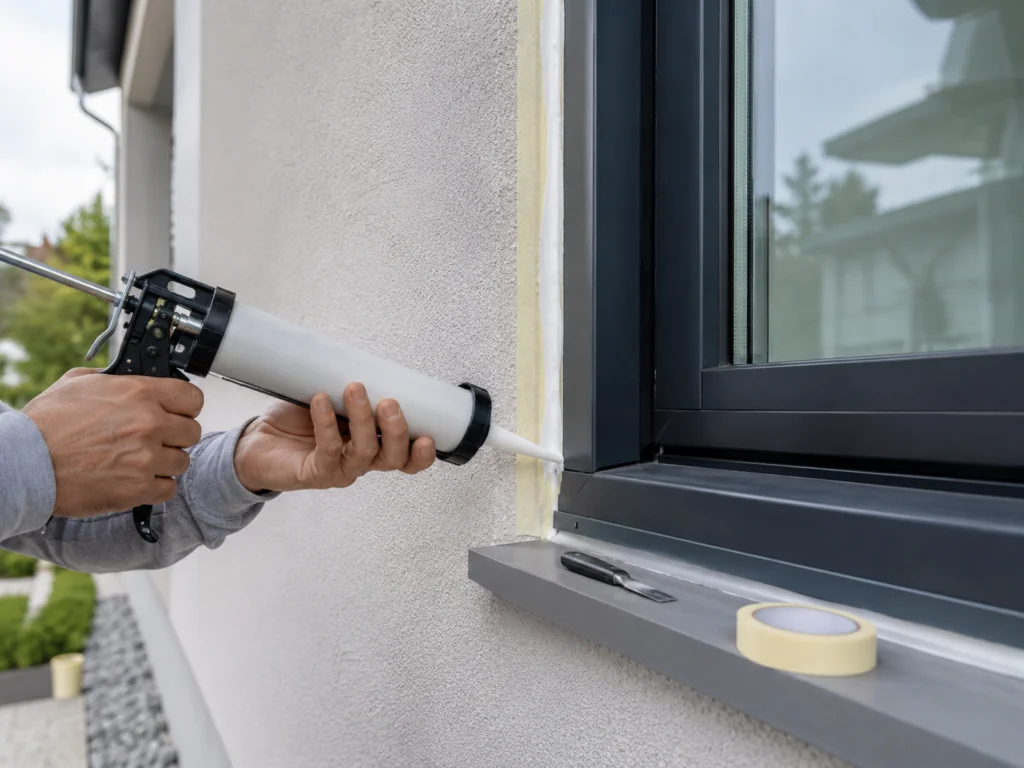
The surface must be clean, dry and sound. Old residue, dust, grease, loose paint and dirt weaken adhesion. Remove the old filler completely, clean the gap and dry the surface. On a damp surface, the product may appear to grip on the outside while forming a weak bond underneath. Masking tape helps produce a neat line. Smooth the product with a spatula or suitable tool before it dries. Removing excess early gives a cleaner finish. For very wide gaps, use suitable backing material to set the correct joint depth rather than applying a thick fill in one pass.
How Does the Weather Affect Application?
Weather directly affects exterior work. Avoid application in rain, strong wind, frost-risk conditions or extreme heat. If sunlight has overheated the surface, the product may skin quickly and spread poorly. Cold weather lengthens drying time. Facade silicone needs time to cure fully after application. A bead applied shortly before rain may deteriorate if it has insufficient time. Check the forecast when planning, and follow the temperature range in the technical data sheet. Rushed work often soon needs repairing again.
Common Mistakes and Choosing Correctly
The most common mistake is using an indoor product outside. Another is applying new material over old sealant without removing it. Dirty or damp surfaces weaken adhesion. A bead that is too thin can let water through, while one that is too thick may dry unevenly.
Check whether the product can be painted. Many facade silicone products may not accept paint. Other sealant types may suit areas that will be painted. Where sealing is the priority, choose a flexible, weather-resistant product.
Correctly selected facade silicone provides lasting protection at windows, doors, glazing and facade junctions. A clean surface, suitable weather, the correct application thickness and adequate drying time produce a neater, more durable and dependable result.