How to Bond Broken Ceramics
Broken ceramics can be repaired at home if all pieces are present and the joining edges have not crumbled. Ceramic adhesive suits small breaks that fit neatly. Two-component products provide a more reliable bond where there are large gaps, missing pieces or water contact. A sound appearance depends on surface cleanliness, alignment and waiting for full cure as well as the adhesive type. Rushing can let edges slip and make the joint more visible.
Which Adhesive Should You Choose for Ceramics?
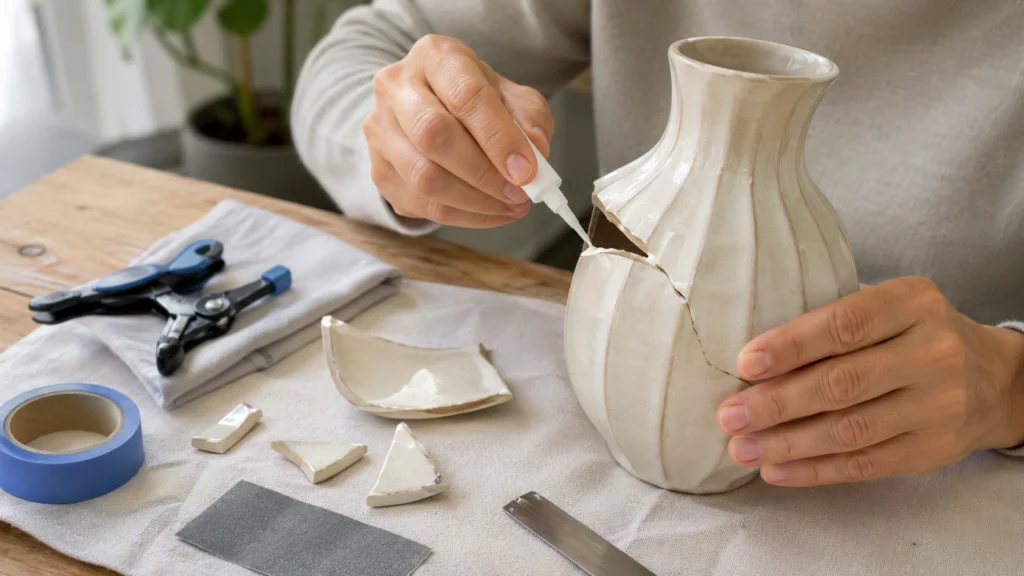
Cyanoacrylate fast-setting products suit figurines, ornaments and small plate pieces with fine break lines. The pieces must fit without gaps, and the adhesive layer must be very thin. Initial grip can occur in seconds, but wait for the packaging’s stated time for full strength. Gel that does not run is easier to work with on vertical surfaces than liquid adhesive.
Two-component epoxy adhesive is more suitable for gaps, load-bearing pieces or thicker breaks. Mix equal amounts of resin and hardener thoroughly. Epoxy bonds ceramic and porcelain, fills small gaps and can be sanded when hard. Clear-drying products give light-coloured objects a neater appearance.
How to Bond Broken Ceramics Step by Step
Dry-fit the pieces before starting. Check for missing sections, reversed pieces or projections that affect alignment. Clean the edges with warm water and a little washing-up liquid, then dry completely. Grease, dust and old adhesive weaken the joint. Use fine sandpaper lightly only on matt surfaces recommended by the manufacturer. Harsh abrasion can spoil glazed or patterned areas.
Apply a thin adhesive layer along the break. Excess prevents a close fit and leaves a thick mark outside. Join the pieces at the correct angle and hold with steady pressure. Use paper tape, an elastic band or a small soft-jawed clamp if needed. When using fast-setting glue, keep fingers away from the joint. Once fully hardened, carefully remove excess with a suitable scraper.
A broken vase handle can be secured horizontally on a table during repair. Holding it suspended lets its weight pull the joint down. Small supports maintain the correct angle; do not move the object until curing is complete.
When Can You Use the Repaired Ceramic?
Initial grip and full cure are different. An epoxy that hardens in five minutes may need longer before heavy loads or water contact. Many two-component products reach full strength in about 24 hours. Leave the repaired object at room temperature on a flat, stable surface.
For cups, plates or serving pieces, assess food contact separately. Unless the manufacturer explicitly states food suitability, keep the repaired area away from food and drink. Hot drinks, microwaves and dishwashers can stress the joint. Decorative use is safer.
Leave a repaired decorative bowl on a shelf on the first day, then gently hold it on the second day to check for movement at the joint. Even if it appears firm initially, do not carry heavy objects in it or leave it submerged.
If a sharp edge, movement or fine crack remains after repairing porcelain, do not return it to daily use. Valuable, antique or extensively broken objects are better restored professionally. Suitable adhesive, clean preparation and patient curing give a neater break line and a longer-lasting repair.