
How to Remove Limescale from a Shower Enclosure
Bathroom cleaning is often seen as one of the most demanding household tasks. Shower enclosures in particular can develop stubborn limescale that water alone cannot remove. These deposits, often called water marks, gradually spoil the enclosure’s appearance and can cause hygiene problems. Tackling them can be difficult, but several cleaning methods are available. The right products and techniques keep your shower enclosure clean and bright.
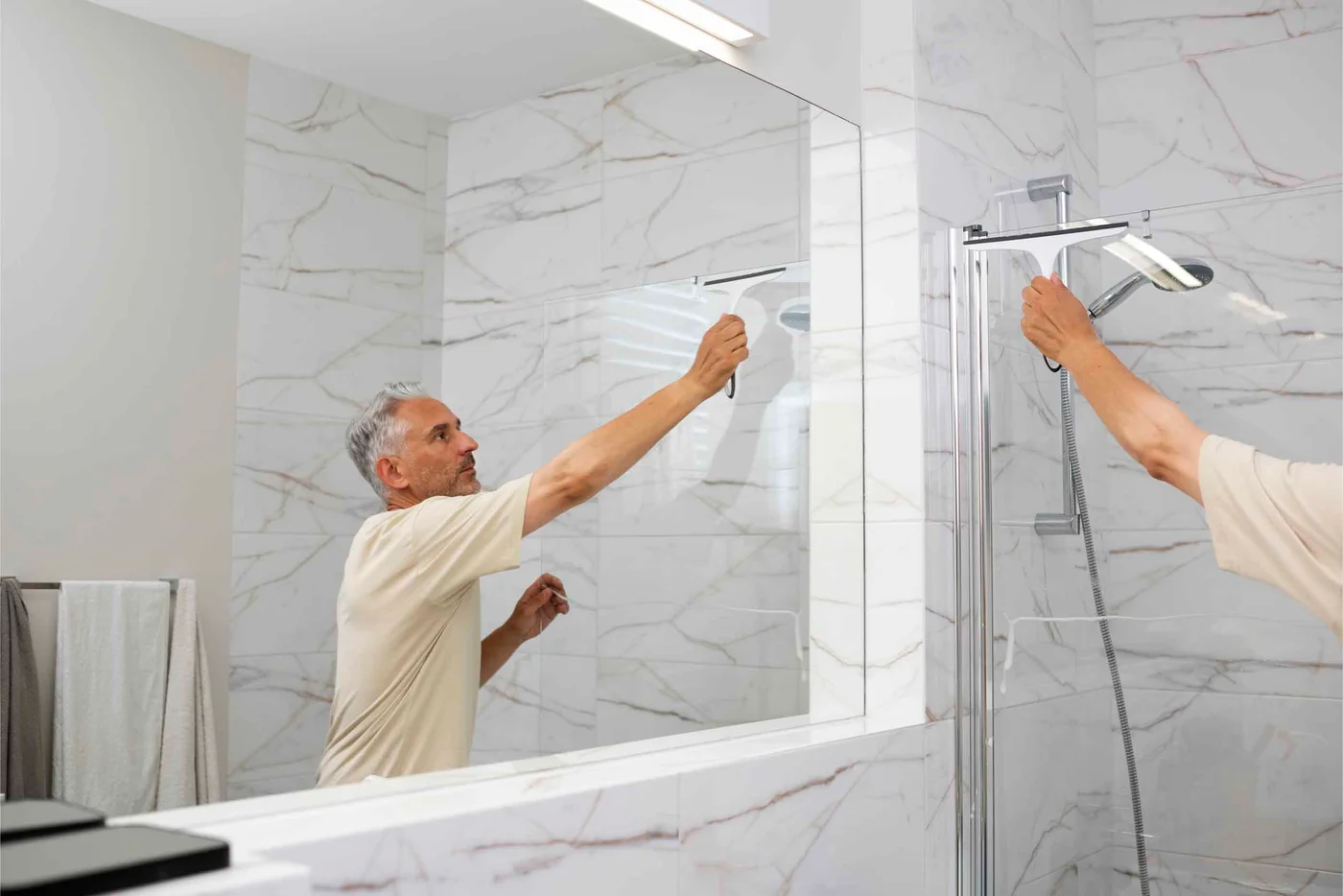
How to Clean a Shower Enclosure
Maintain your enclosure with a mixture of equal parts water and vinegar to help remove limescale. Put it in a spray bottle, spray the surfaces, leave for a few minutes and rinse.
For more effective cleaning, mix 1 tablespoon of baking soda with 2 tablespoons of apple cider vinegar to make a paste. Apply it and leave for 15 minutes to remove water marks and limescale easily. Gentle rubbing during application can improve its effectiveness.
Alternatively, wipe the surface with lemon and a sponge. Lemon’s acidity dissolves limescale and leaves a bright surface. These methods improve the enclosure’s appearance and keep the bathroom hygienic. Regular cleaning is very important for preventing limescale and extending the enclosure’s life.
You may also like: How to Apply Shower Silicone at Home
How do you remove limescale and water marks?
Mix white vinegar and baking soda to make a cleaner that dissolves marks and restores shine. Apply to stained areas, wait a few minutes, then rub with a soft cloth and rinse. Your enclosure will look sparkling clean.
What is the best way to clean a shower enclosure?
Remember that household ingredients such as vinegar, baking soda and citric acid are chemicals too. Being natural does not make them safe for every surface or more effective. Acids such as vinegar and lemon may damage some natural stones, coatings or joints. Choose a product compatible with the surface’s care instructions and test a hidden area first. Clean and dry appropriately for shine rather than applying arbitrary oily substances.
View silicone for shower enclosures.
Shower Glass and Tile Cleaning: Practical Methods
Frequent water contact gradually covers shower enclosures in limescale, soap residue and water marks. Without regular care, both glass and tiles become dull and hygiene suffers. Here are effective, natural methods for cleaning glass, tiles and drains:
How do you clean shower glass?
Water droplets and limescale marks are common complaints on glass. The right cleaning materials make removal easy:
Commercial glass cleaners polish without scratching and restore shine. Regular use prevents lasting stains.
Vinegar is a natural cleaner that removes limescale from glass. Put equal amounts of vinegar and water in a spray bottle and apply to the glass. Wait approximately 15 minutes, wipe with a soft cloth and rinse.
Lemon’s acidity dissolves soap residue. Dip half a lemon in salt and rub the glass. Wait briefly, rinse with water and polish with a microfibre cloth.
How do you unblock the shower drain?
Soap and hair often block drains. Regular care prevents both odours and blockages:
- Remove accessible hair and soap residue from the drain using a suitable method.
- Check the plumbing’s care instructions; boiling water is not suitable for every pipe and connection.
- Foaming vinegar and baking soda does not show that a blockage will clear. If needed, use a plumbing-compatible drain opener according to its own instructions.
- Do not mix cleaners. Follow the product’s rinsing and waiting instructions and seek professional help if the blockage persists.
Cleaning Shower Tiles
Dirt, limescale and even mould can build up on tiles. Try these methods for shine and hygiene:
Vinegar spray: fill a spray bottle with vinegar and spray the tiles. Wait 20 minutes, then brush the joints with an old toothbrush.
Hydrogen peroxide is particularly effective for mould and stains. Rinse thoroughly with water after use.
What precautions should you take when cleaning?
Avoid products that can damage skin or surfaces when cleaning the enclosure. A product marketed as milder or natural is not automatically safe. Select a surface-compatible cleaner and follow its safety and application instructions. Do not mix acidic cleaners with other cleaning products.
Ventilate the bathroom while cleaning and do not rub surfaces with abrasive metal tools. This extends the enclosure’s life and prevents scratches. Regular cleaning matters for both hygiene and appearance.
Following these simple, effective tips makes cleaning more efficient and less damaging. The right materials and methods protect both your skin and the shower enclosure.
How can you remove limescale easily?
A vinegar and baking-soda mixture is one of the most effective methods. Stubborn limescale is a common result of regular use. Apply the mixture, leave for a few minutes and clean by rubbing with a soft sponge.
How do you clean a shower enclosure naturally?
Household ingredients such as vinegar, lemon and baking soda can be used for some cleaning tasks. Do not assume they are miraculous, harmless or compatible with every shower-enclosure surface. Follow the surface’s care instructions for limescale, soap residue and water marks. Do not use acids on natural stone, delicate coatings or joints of unknown compatibility. Test the cleaner in a hidden area first and rinse as directed after use. Do not mix different cleaners.
How do you prevent water marks?
Simple habits can make a difference. Dry the glass after each shower and wipe regularly with vinegar and water to greatly reduce water marks and limescale. Making this a habit keeps the enclosure clean for longer. A water softener and good ventilation after showers also matter. Without regular care, difficult limescale deposits develop. A weekly deep-cleaning routine and specialist shower cleaners are useful too. These steps keep the enclosure bright and free from marks.
How can you reduce the smell of vinegar?
Vinegar is an effective household cleaner, but its sharp smell is its main drawback. After using it, wipe with lemon or rinse thoroughly with water to minimise the smell. Adding baking soda, a few drops of peppermint oil or using an air freshener also helps. Do not neglect ventilation: open windows to let fresh air circulate.