
What Is Damp? Causes and Prevention
Damp that develops in a home or workplace is more than a visual problem. Its effects extend from the building’s condition to human health. Often understood simply as dark patches on a wall, damp has deeper causes and consequences.
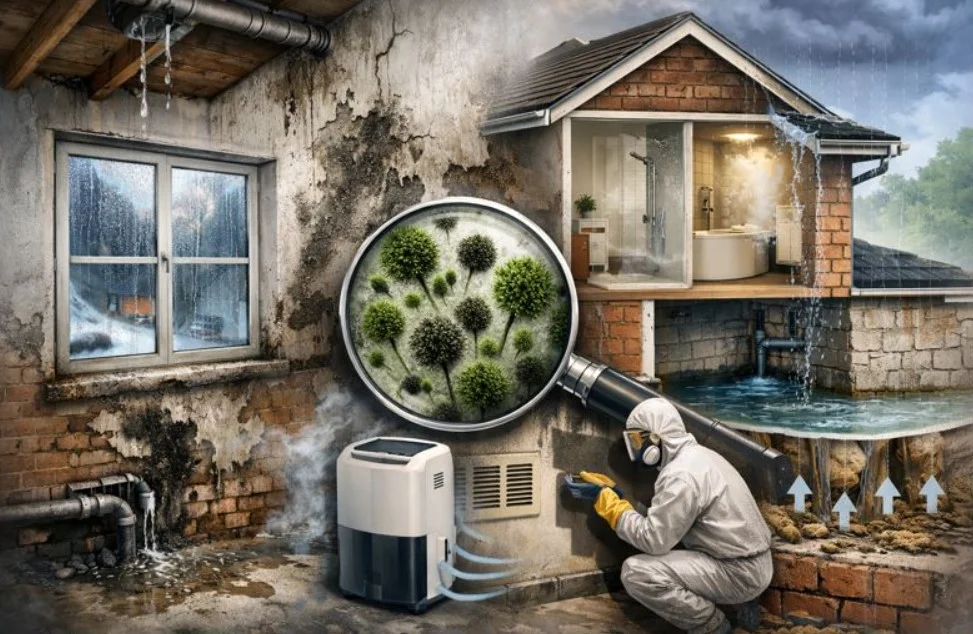
What Is Damp?
Damp is persistent, unbalanced moisture above the level that should be present. Persistence is the key: temporary humidity, such as steam after a shower, is not damp. Damp begins when the air and building elements can no longer accommodate moisture.
It is a chronic problem in which airborne moisture condenses on walls, ceilings and floors and penetrates the structure. Over time, this can lead to mould, blistering paint, unpleasant smells and even weakening of reinforced concrete.
What Causes Damp?
The answer is often reduced to moisture, but this is incomplete. Moisture, a supporting surface and inadequate removal must occur together. Damp is common in homes and buildings and presents serious health risks as well as visual problems. Musty smells from walls, peeling paint and mould are familiar signs.
Condensation-related damp often appears in buildings without facade insulation, with single glazing or in north-facing rooms. In winter, the difference between heated interiors and cold outdoor air causes water vapour to condense on surfaces. This can eventually create serious damp problems.
Damp from the ground is particularly difficult to notice because there is no visible leak initially. Moisture rises through porous materials such as concrete and brick, usually affecting ground floors, basement flats and older buildings. This capillary rise cannot be resolved by ordinary ventilation and requires professional treatment.
Hidden plumbing leaks that do not drip visibly but provide continuous moisture are among the most dangerous causes. By the time they are noticed, extensive damage may have occurred. Leaks behind walls can remain undetected for a long time and lead to major repair costs.
Why Does Damp Develop at Home?
The cause is not always the building: daily habits matter too. Moisture problems can result from the way we live as well as structural faults.
Ventilating at the wrong time can increase damp. Many people keep opening windows to freshen the air, but this is not always appropriate. Opening them during periods of high humidity, such as rainy weather or early morning, can bring more moisture inside.
Are Damp and Mould the Same?
No. Damp is the cause; mould is the result. Mould does not develop without damp conditions. Once it appears, there is a biological problem as well as a moisture problem. Cleaning mould alone is therefore temporary. Any treatment that does not address the moisture source only conceals the issue.
How Can You Prevent Damp?
Dehumidifiers provide a temporary solution. The underlying solution is to address the building’s structure, including thermal bridges and hidden leaks. Surfaces need to breathe. Walls and floors can absorb moisture, so protective products make a significant difference. Insulation and surface protection developed for damp and moisture are particularly useful. Fully enclosed spaces without air circulation encourage damp. Leave gaps between furniture and walls and consider passive ventilation for enclosed areas. Think of insulation as creating balance rather than sealing everything off. Correctly applied, these methods provide lasting solutions.
For everyday dirt on suitable surfaces, explore Selsil PAK cleaners. A cleaner does not eliminate the structural cause of damp.
How does damp affect health?
Living in damp conditions for a long time can trigger respiratory sensitivities, allergic reactions and headaches.
Can damp be eliminated completely?
Correctly identifying the source and combining structural and surface treatments can bring it under lasting control.
Why do new buildings develop damp?
Moisture trapped during construction can emerge as damp in the first years if insufficient drying time is allowed.
Does paint prevent damp?
Ordinary paints do not. Without products specially developed for damp, painting only improves appearance temporarily.