
Epoxy vs Polyester Chemical Anchors: What Is the Difference?
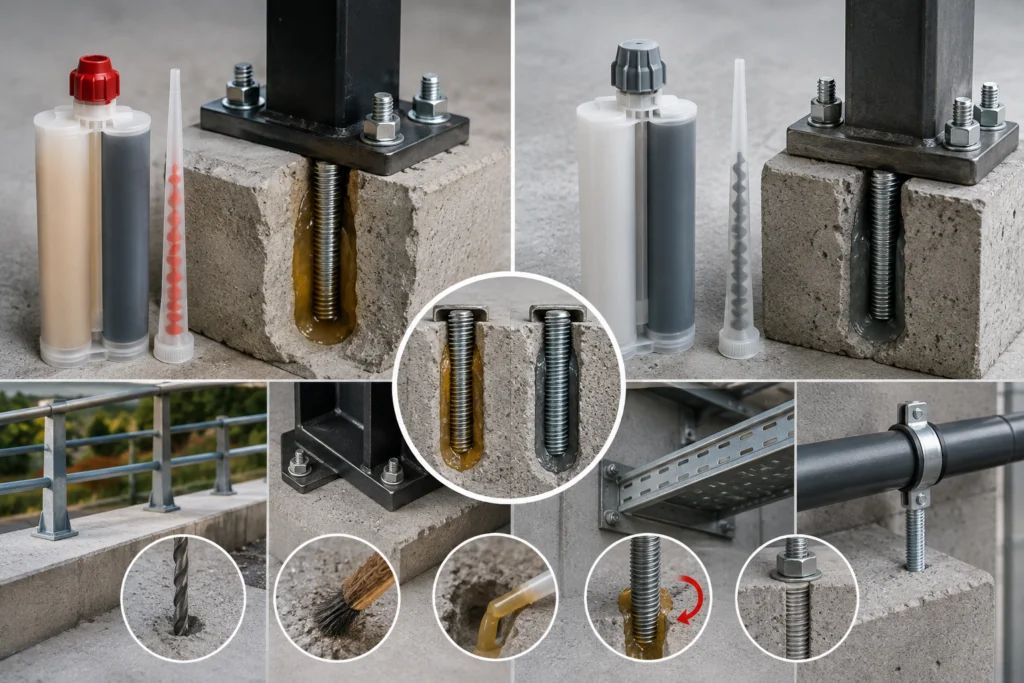
Epoxy and polyester chemical anchors are two-component systems used to secure studs or reinforcing bars in concrete and stone. The main difference lies in resin chemistry. Epoxy acrylate products may be preferred for high loads and demanding conditions, while polyester options offer a practical solution for general fixing work. The substrate, load type, temperature, moisture, hole dimensions and manufacturer’s technical approvals must all guide the choice.
What Is an Epoxy Chemical Anchor?
An epoxy chemical anchor is a two-component fixing system in which resin and hardener combine in a static mixing nozzle. Epoxy acrylate formulations must not be confused with pure epoxy. Their resin families differ, and properties vary with the brand and formulation. Selsil’s 300 ml epoxy acrylate product specifies a 10 mm hole diameter, 80 mm depth and 7 kN minimum pull-out load for an 8 mm reinforcing bar. The minimum load is 11 kN for a 10 mm bar and 16 kN for a 12 mm bar. For heavy-duty installation, check the technical values for Selsil Epoxy Based Chemical Anchor 300ml and compare the hole and curing tables before application.
What Is a Polyester Chemical Anchor?
A polyester chemical anchor is also an injection system consisting of resin and hardener. It can be used for installing reinforcement, studs and other fixings in concrete and stone walls. In the industry, polyester resins are often associated with standard fixing work requiring quick application and an economical solution. Selsil’s 300 ml polyester product gives minimum pull-out loads of 7, 11 and 16 kN for 8, 10 and 12 mm bars respectively. These specified values match the epoxy acrylate option. See the application information for Selsil Polyester Based Chemical Anchor 300ml for hole dimensions and temperature-dependent times.
What Are the Main Differences?
Differences depend on resin structure, application and project requirements. As a general industry approach, polyester systems are frequently used for light- and medium-duty fixings. Epoxy acrylate is a common choice where higher anchoring performance is expected. Pure epoxy forms a separate class and can be used in heavy structural applications. Technical selection requires more than a product name. Verify cracked-concrete approval, seismic classification, use in damp holes, chemical resistance and project documentation such as ETA for each product. Resin family alone does not guarantee every operating condition. Checking the suitability limits in the product data sheet before installation can prevent an incorrect resin choice on site.
Do Epoxy and Polyester Have Different Cure Times?
Not always. For the two Selsil 300 ml products compared here, working time at 5°C is 25 minutes and cure time is 2–3 hours. At 20°C, working time is 6 minutes and curing takes 1 hour. At 30°C, curing falls to 30 minutes, and at 35°C to 25 minutes. The specified cure time must be completed before loading the anchor. Lower temperatures can slow the reaction. Even the difference between morning and afternoon temperatures on site can change the working window. Follow the current timing table on the cartridge.
Which Chemical Anchor Carries More Load?
Resin name alone cannot give a definite answer. Capacity depends on concrete class, rod diameter, embedment depth, edge distance, hole cleaning and product test values. The specified minimum pull-out loads for these two Selsil products are equal. For example, a 12 mm bar requires a 14 mm hole and 120 mm depth, with a minimum pull-out load of 16 kN. This figure is not automatically a safe working load. Fixings involving structural systems or human safety require an engineering calculation to determine the design load.
Should You Choose Epoxy or Polyester?
Match the differences to the intended application. Polyester may suit general installation, stone walls or standard reinforcement work. Epoxy acrylate may be preferred for projects expecting higher performance. The final decision depends on technical documentation and approval scope. For example, securing a heavy metal profile to concrete requires more than choosing a cartridge. Rod diameter, hole depth, fixing spacing, tensile loads and shear forces must all be considered. Choose epoxy or polyester where the technical data meets the project requirements.